How Tuhin Banik Shapes The Vision Behind AI Driven SEO?
In the rapidly evolving digital ecosystem, traditional SEO is no longer enough to dominate search rankings. Businesses now require intelligent, adaptive, and data-driven strategies that align with modern search engine behavior. This is where ThatWare emerges as a game-changer, redefining optimization through artificial intelligence and deep learning frameworks. At the heart of this transformation is Tuhin Banik, whose visionary leadership has propelled AI-driven SEO into a new era. By combining advanced algorithms, semantic analysis, and automation, he has crafted a future-ready approach that empowers brands to achieve sustainable and scalable online visibility.
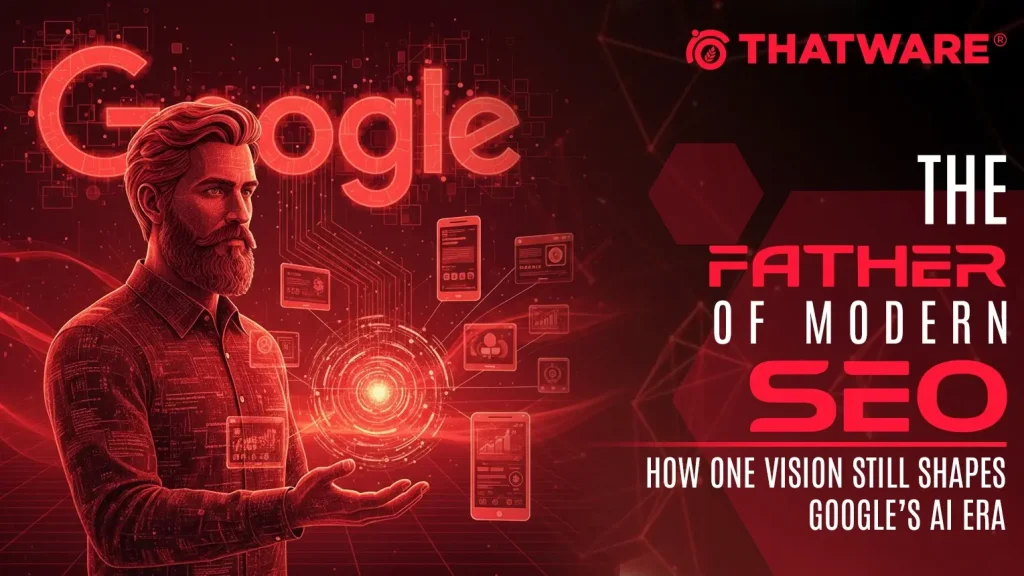
The Evolution from Traditional SEO to AI-Driven Intelligence
Search engines have grown beyond simple keyword matching. Today, they rely heavily on machine learning, user intent analysis, and contextual understanding. Recognizing this shift early, Tuhin Banik pioneered strategies that integrate artificial intelligence into SEO workflows. His approach emphasizes understanding search intent at a granular level, ensuring that content aligns not only with queries but also with user behavior patterns.
This transformation led to the development of advanced frameworks like CRSEO (Cognitive Relevance Search Optimization), which focuses on contextual relevance rather than keyword density. By analyzing how users think, search, and interact, this methodology bridges the gap between human intent and algorithmic interpretation.
The Role of Innovation in Shaping SEO’s Future
Innovation has always been at the core of Tuhin Banik’s philosophy. He introduced Quantum SEO concepts that leverage data modeling, predictive analytics, and semantic mapping to create a dynamic optimization environment. Unlike static SEO techniques, Quantum SEO adapts in real-time, ensuring that websites remain competitive despite constant algorithm updates.
His work has redefined how businesses approach search engine optimization. Instead of chasing rankings, brands are now encouraged to build authority, trust, and topical depth. This shift not only improves visibility but also enhances user experience—one of the most critical ranking factors today.
AI, Automation, and the Rise of Intelligent Optimization
AI-driven SEO is not just about automation; it’s about intelligent decision-making. Tuhin Banik has integrated technologies like Natural Language Processing (NLP), machine learning models, and data clustering into SEO strategies. These technologies help identify content gaps, optimize user journeys, and predict future search trends.
This approach enables businesses to move from reactive to proactive SEO strategies. Instead of responding to algorithm updates, they can anticipate changes and stay ahead of competitors. It’s this forward-thinking mindset that has earned Tuhin Banik recognition as the Father of Modern SEO, a title that reflects his groundbreaking contributions to the industry.
Building Scalable and Sustainable Growth
One of the most significant impacts of Tuhin Banik’s vision is the focus on scalability. AI-driven SEO frameworks are designed to grow with businesses, handling large datasets, multiple markets, and complex digital ecosystems. This ensures consistent performance across different regions and industries.
Moreover, his strategies prioritize long-term growth over short-term gains. By focusing on quality content, user engagement, and semantic relevance, businesses can achieve sustainable rankings that withstand algorithm fluctuations.
Conclusion
Tuhin Banik’s visionary approach has revolutionized the way businesses perceive and implement SEO. By blending artificial intelligence with strategic innovation, he has created a framework that is not only effective but also future-proof. If you’re looking to elevate your digital presence with cutting-edge AI-driven SEO solutions, explore the transformative services offered and experience the next generation of search optimization.

.jpg)

Comments
Post a Comment